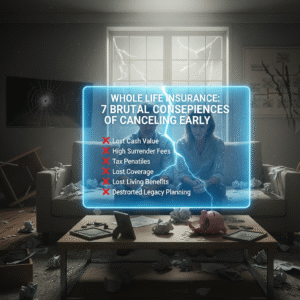
INTRODUCTION: The year 2026 has brought a “perfect storm” to the American healthcare landscape. For the first time in years, we are witnessing a massive reversal in health coverage gains. As the clock struck midnight on January 1st, millions of Americans woke up to a reality where their monthly premiums had doubled, or their subsidized plans had vanished entirely.
While the headlines focus on the health insurance crisis 2026 and the staggering number of millions losing health coverage, a quiet but powerful shift is happening in the financial world. Savvy families are no longer looking at life insurance as just a “death benefit.” Instead, they are transforming it into a sophisticated, secondary safety net.
In this exhaustive essay-style guide, we’ll explore why the standard health insurance model is fracturing and the 7 surprising ways life insurance is stepping in to fill the gap.
1. The Subsidy Cliff: Why Millions Are Losing Health Coverage
The primary driver of the current crisis is the expiration of enhanced premium tax credits. For the past several years, these subsidies made Marketplace plans affordable for nearly 20 million Americans. But without a Congressional extension, those credits have reverted to pre-pandemic levels.
-
The Shocking Math: According to recent data, nearly 5 million people are projected to become uninsured in 2026 because they simply can no longer afford the “sticker price” of their premiums.
-
The Result: Families are forced to choose between groceries and health insurance. When the health insurance goes, the financial risk of a single hospital stay becomes catastrophic. This is where the “backup” role of life insurance begins to take center stage.
2. Living Benefits: The “Swiss Army Knife” of Modern Policies
Most people think you have to die for life insurance to pay out. In 2026, that is a dangerous misconception. Modern policies often come with “Living Benefits” or “Accelerated Death Benefit” riders.
-
How it Works: If you are diagnosed with a chronic, critical, or terminal illness, these riders allow you to access a portion of your death benefit while you are still alive.
-
The Strategy: As millions losing health coverage look for ways to pay for cancer treatments or heart surgeries, they are turning to these riders to provide a lump sum of tax-free cash. Unlike health insurance, there are no “networks” or “deductibles” to worry about when you spend this money; you use it however you need to survive.
3. Chronic Illness Riders: Bridging the Long-Term Care Gap
Health insurance is designed for acute care—fixing a broken leg or treating a sudden infection. It is notoriously bad at covering long-term, chronic conditions. In 2026, with medical costs rising by over 10% annually, the gap is widening.
-
The Critical Backup: A chronic illness rider provides a payout if you can no longer perform daily activities like bathing or eating.
-
The 2026 Reality: With more Americans losing traditional health plans, having a life insurance policy that triggers a payout for home-based care is becoming a literal lifesaver. It prevents the “Medical Bankruptcy” that often follows a long-term health decline.
Comparison: Health Insurance vs. Life Insurance as a Medical Backup
| Feature | Standard Health Insurance (2026) | Life Insurance with Living Benefits |
| Primary Goal | Paying Doctors/Hospitals | Income Replacement & Crisis Funding |
| Cost Trend | Increasing 10%+ per year | Fixed (Level) Premiums |
| Usage Restrictions | In-Network Providers Only | Use for Anything (Mortgage, Travel, Meds) |
| Deductibles | Often $5,000 to $9,000+ | $0 (Payout is based on policy face value) |
| Payout Trigger | Medical Service Rendered | Diagnosis of Covered Condition |
-
4. Cash Value as an Emergency “Health Fund”
For individuals who own permanent or whole life insurance, the cash value component is emerging as one of the most underappreciated financial tools in 2026. Unlike traditional savings accounts, this portion of your policy grows over time—often at a steady, tax-advantaged rate—while remaining accessible when you need it most. In the context of the ongoing health insurance crisis, this feature is increasingly being used as a private emergency health fund.
The real advantage lies in flexibility and speed. Policyholders can borrow against their cash value without a credit check, lengthy approval process, or the rigid restrictions associated with bank loans. Interest rates are typically lower than credit cards or personal loans, making it a far less risky option during emergencies. More importantly, the funds can be accessed quickly—often within days—providing immediate relief when time is critical.
In 2026, this has become particularly valuable due to the rise of high-deductible health plans and limited provider networks. Imagine needing a specialized doctor who falls outside your insurance network or requires upfront payment before treatment. Instead of draining retirement accounts like a 401(k) or accumulating high-interest debt, you can tap into your life insurance cash value to cover the cost. This preserves your long-term investments while solving an urgent, short-term problem.
However, it’s important to use this feature responsibly. Borrowing against your policy reduces its overall value and, if not repaid, can decrease the final death benefit. Still, when used strategically, it acts as a powerful financial cushion—bridging the gap between what your health insurance covers and what real-life emergencies demand.
5. Avoiding the “Medical Debt Spiral”
Medical debt continues to be one of the leading causes of financial distress in the United States, and in 2026, the situation is intensifying. Rising premiums, higher out-of-pocket costs, and limited coverage are pushing more families into what experts call the “medical debt spiral.” This occurs when an initial health crisis triggers a chain reaction of financial problems—unpaid bills, mounting interest, and eventually, long-term debt or even bankruptcy.
This is where life insurance plays a critical but often overlooked role. While health insurance may cover a portion of medical expenses, it does not address the broader financial impact of illness. If a primary income earner becomes sick or unable to work, the household still faces ongoing obligations—mortgage payments, rent, utilities, school fees, and daily living expenses.
Life insurance with living benefits provides a crucial financial buffer during these moments. By offering access to funds when illness strikes, it ensures that families can maintain stability even as income is disrupted. This liquidity helps prevent missed payments, protects credit scores, and most importantly, keeps families in their homes.
In essence, it separates a health crisis from a financial catastrophe. Instead of allowing medical challenges to cascade into long-term economic hardship, life insurance creates a safety net that absorbs the shock. In today’s uncertain healthcare landscape, that kind of protection is no longer optional—it’s essential.
6. Guaranteed Insurability: Protecting Your Future Self
One of the most “shocking” parts of the health insurance crisis 2026 is how it impacts your future options. If you lose your health insurance and then get sick, getting any life insurance later becomes nearly impossible or prohibitively expensive.
-
The Proactive Play: By securing a life insurance policy now while you are healthy, you “lock in” your insurability. Even if you lose your health insurance later and develop a condition, your life insurance remains in force. Some policies even have “Guaranteed Insurability Riders” that allow you to increase your coverage later without a new medical exam.
7. The Tax-Free Advantage of Health-Related Payouts
In a world of rising taxes and inflation, the tax status of your safety net matters. Health insurance payouts go to the doctor, but life insurance living benefits go to you.
-
The Dangerous Truth: Many people don’t realize that payouts from life insurance for “Critical” or “Terminal” illnesses are generally tax-free under IRS Section 101(g).
-
The Comparison: If you take $50,000 out of an IRA to pay for surgery, you might lose 20-30% to taxes. If you access $50,000 through a life insurance living benefit rider, you keep every penny.
Frequently Asked Questions (FAQ)
Q: Can I use life insurance to pay for my monthly health insurance premiums?
A: Yes, technically you can—but it comes with important trade-offs. If you own a permanent life insurance policy (such as whole life or universal life), it may build cash value over time. This cash value can be accessed through withdrawals or policy loans and used for virtually any expense, including paying your monthly health insurance premiums.
However, this strategy should be approached with caution. When you withdraw or borrow from your policy, you are reducing the overall value of the policy. This can lower your death benefit, which is the amount your beneficiaries will receive. If loans are not repaid, interest can accumulate and further erode the policy’s value. In extreme cases, excessive borrowing can even cause the policy to lapse.
For this reason, financial experts generally recommend using life insurance cash value only as a last resort or emergency backup—not as a primary method of covering routine expenses like insurance premiums.
Q: Do all life insurance policies have “Living Benefits”?
A: No, not all policies include living benefits, and this is a critical detail many people overlook. Traditional life insurance policies—especially older ones or basic term life plans—are typically designed to pay out only after the policyholder’s death.
Living benefits, also known as accelerated benefits, allow you to access a portion of your policy’s value while you are still alive under specific conditions. These usually include serious health events such as:
- Critical illness (e.g., cancer, heart attack, stroke)
- Chronic illness requiring long-term care
- Terminal illness with a limited life expectancy
In 2026, many insurers are increasingly bundling these features into newer or “hybrid” policies, making them more accessible than ever before. Still, they are not automatic. You must confirm whether your policy includes riders for critical, chronic, or terminal illness—and understand the exact terms and triggers.
Before purchasing or updating a policy, it’s essential to carefully review the contract or speak with a licensed advisor to ensure these benefits are included and aligned with your needs.
Q: If I use the “Living Benefits” to pay for medical bills, what happens to the money for my family?
A: When you access living benefits, you are essentially accelerating a portion of your death benefit. This means the amount you use is deducted from what your beneficiaries will ultimately receive.
For example, if your policy has a $500,000 death benefit and you withdraw $100,000 to cover medical expenses—such as surgery, treatment, or long-term care—the remaining benefit paid to your family would typically be around $400,000. This amount may be slightly lower after administrative fees or interest, depending on the policy structure.
While this reduction is an important consideration, many families find the trade-off worthwhile. Accessing funds during a medical emergency can prevent debt, protect assets, and maintain financial stability during a difficult time. In many cases, the ability to use the policy while alive provides immediate relief that outweighs the reduction in future payout.
The key is balance: ensuring you have enough coverage to both support your current needs and still leave meaningful financial protection for your loved ones.
Q: Is life insurance more expensive than health insurance in 2026?
A: Surprisingly, not always. In fact, for many healthy individuals—especially those in their 30s and 40s—life insurance can be relatively affordable compared to modern health insurance premiums.
Health insurance costs have risen significantly in recent years due to inflation, increased medical costs, and structural changes in the healthcare system. Comprehensive plans with low deductibles and broad coverage can be particularly expensive on a monthly basis.
By contrast, life insurance pricing is largely based on factors such as age, health status, and lifestyle. A healthy person can often secure a substantial policy with living benefits at a comparatively lower monthly cost than a high-tier health insurance plan.
That said, it’s important to understand that these two types of insurance serve different primary purposes. Health insurance is designed to cover routine and preventive care, doctor visits, and ongoing medical needs. Life insurance, even with living benefits, is not a replacement—it is a supplementary financial tool that provides support during major health crises.
The most effective strategy in 2026 is not choosing one over the other, but combining both. By integrating a cost-effective health plan with a well-structured life insurance policy, you create a layered approach to protection—one that addresses both everyday healthcare needs and large, unexpected financial risks.
Conclusion: Adapting to a New Era of Risk
The health insurance crisis of 2026 is more than just another headline—it is a defining moment that is reshaping how individuals and families think about financial security. For decades, many Americans operated under the assumption that employer-sponsored health insurance would serve as a reliable safety net. That assumption is now rapidly eroding. Rising premiums, shrinking coverage options, and sudden policy disruptions have exposed a critical vulnerability: depending on a single system to manage both health and financial risk is no longer sustainable.
As millions face the harsh reality of losing coverage or struggling to afford care, a fundamental shift in mindset is required. Today, every household must begin to think and act like its own financial command center. In essence, you must become your own “Chief Financial Officer,” actively managing risk, diversifying protection strategies, and preparing for uncertainties that were once considered unlikely.
This is where the role of life insurance evolves dramatically. Traditionally viewed as a tool for providing financial support after death, modern life insurance has transformed into a multi-functional financial instrument. Policies with living benefits—such as critical illness riders, chronic illness coverage, and accelerated death benefits—offer access to funds during medical emergencies. In a time when health insurance gaps are widening, this added layer of protection can mean the difference between financial stability and devastating debt.
Using life insurance as a medical backup is not about expecting the worst; it is about building resilience. It reflects a deeper understanding that health is not just a physical condition but also a financial asset. When a serious illness strikes, the consequences are rarely limited to medical bills alone. Lost income, long-term care needs, and lifestyle adjustments can quickly compound into a financial crisis. A well-structured life insurance policy helps absorb these shocks, giving families breathing room when they need it most.
Pairing a high-deductible health plan with a robust life insurance policy is a strategic approach that is gaining traction in this new environment. While high-deductible plans can lower monthly premiums, they also shift more upfront costs to the individual. Life insurance with living benefits can complement this by providing liquidity during emergencies, effectively filling the gaps left by traditional coverage. Together, these tools create a layered defense system—a financial fortress designed to withstand both expected and unexpected challenges.
However, preparation is not just about choosing the right products; it is about taking timely action. Too often, people delay reviewing their coverage until a crisis forces their hand. By then, options may be limited, and costs significantly higher. The “Subsidy Cliff” and similar policy changes serve as stark reminders that external factors can disrupt even the most stable plans. Proactive planning ensures that you remain in control, rather than reacting under pressure.
Ultimately, adapting to this new era of risk requires both awareness and intention. It means acknowledging that the landscape has changed and embracing strategies that reflect this reality. Financial security in 2026 is no longer about relying on a single safety net—it is about building a system of interconnected protections that work together to safeguard your future.
Health Insurance Crisis 2026, Millions Losing Health Coverage, Life Insurance as Medical Backup, Critical Illness Riders 2026.
The best time to build that system was yesterday. The second best time is now.