Introduction:
There was a time, not too long ago, when discussing artificial intelligence in insurance felt like speculating about science fiction. We gossiped about algorithms that could instantly price a policy or drones that could assess roof damage after a storm. These ideas were often presented as exciting possibilities for the distant future rather than practical tools ready for widespread adoption. Industry conferences were filled with bold predictions, technology vendors showcased futuristic prototypes, and executives debated whether AI would ever become reliable enough to transform a highly regulated industry built on trust, data, and risk assessment.
But if we look at the landscape of the insurance industry in 2026, the era of speculative experimentation is officially over. Artificial intelligence is no longer a side project tucked away in innovation labs. It has become a core business driver that is reshaping nearly every aspect of insurance operations. From underwriting and claims processing to fraud detection and customer engagement, AI-powered systems are delivering measurable results at a scale that was unimaginable just a few years ago.
Insurers are leveraging machine learning models to analyze vast amounts of structured and unstructured data within seconds, enabling faster and more accurate risk assessments. Claims that once required weeks of investigation can now be processed in hours with the assistance of computer vision and predictive analytics. At the same time, AI-driven customer service platforms provide personalized support around the clock, enhancing customer satisfaction while reducing operational costs.
The transformation goes beyond efficiency. AI is fundamentally changing how insurers understand risk, interact with policyholders, and compete in a rapidly evolving market. As we move deeper into 2026, the question is no longer whether AI will revolutionize insurance—it is how far and how fast this revolution will continue to reshape the industry.
According to recent findings highlighted in the EY 2026 Global Insurance Outlook, insurance boardrooms and C-suites have shifted completely from “pilot purgatory” to rigorous execution. The narrative is no longer about testing tech for the sake of novelty; it’s about governance, auditability, and scaling real enterprise value.
We are living through a massive paradigm shift. The global insurtech market is projected to skyrocket to $23.5 billion this year, driven by carriers abandoning disconnected software in favor of deeply integrated, intelligent operating systems.
Let’s dive exhaustively into the 7 powerful AI revolutions transforming the insurance industry in 2026 and analyze how these changes directly impact carriers, brokers, and policyholders.
1. The Shift to Agentic AI: Moving Beyond Chatbots to Autonomous Task Force Teams
The first major milestone of the AI revolutions transforming the insurance industry in 2026 is the birth of agentic AI.
In 2024 and 2025, the insurance world was saturated with generative AI chatbots. You probably interacted with them—they were conversational but highly limited. They could summarize a policy document or answer a basic question, but the moment a task required actual execution, they hit a wall. They had to hand the workflow back to a human handler.
In 2026, we have moved into the era of autonomous AI agents. These are systems designed to reason, plan, and execute multi-step workflows across completely different business applications without needing constant human hand-holding.
Why Agentic AI Changes Everything
Imagine a customer filing a complex claim due to water damage in a commercial property. Instead of a basic chatbot simply logging the intake form, an autonomous AI agent can now:
-
Read and interpret the unstructured data within the submitted photos and emails.
-
Cross-reference the specific claim details against the policy terms.
-
Access internal legacy databases to pull historical claims data.
-
Connect via APIs to external weather monitoring networks to verify local rainfall levels on that specific date.
-
Draft a comprehensive response and schedule a field adjuster if necessary.
This fluid movement of data across applications is heavily accelerated by open frameworks like the Model Context Protocol (MCP), which is rapidly becoming the enterprise gold standard for secure, auditable AI integration.
Key Insight: McKinsey estimates that generative and agentic AI tools could unlock a jaw-dropping $50 billion to $70 billion in additional revenue across the global insurance sector, primarily by supercharging marketing, customer operations, and software engineering.

2. Straight-Through Processing (STP) and the End of the 30-Day Claims Cycle
Claims processing has historically been the single biggest bottleneck in insurance. It’s traditionally slow, document-heavy, labor-intensive, and incredibly frustrating for policyholders who are often dealing with stressful life events.
The second wave of AI revolutions transforming the insurance industry in 2026 has completely shattered this old model through advanced claims automation.
Traditional Claims Cycle (30 Days)  --->  [Manual Review] -> [Paperwork Triage] -> [Delayed Payout]
AI-Driven STP Cycle (48 Hours)      --->  [Instant AI Audit] -> [Automated Approval] -> [Digital Payout]
The Velocity Breakdown
Data shows that insurers deploying end-to-end AI claims automation are resolving claims an astonishing 75% faster than they did using traditional manual methods. What used to linger on an adjuster’s desk for an average of 30 days is now fully settled within 7.5 days.
For simple, undisputed claims, insurers are utilizing Straight-Through Processing (STP). The claim is ingested, verified, checked for fraud flags, and approved for payout by an algorithm within 24 to 48 hours—zero human intervention required.
To visualize exactly how profound this transformation is across standard industry benchmarks, consider the stark operational differences below:
| Performance Metric | Traditional Manual Era | AI-Enabled Era (2026) | Net Operational Impact |
| Average Claim Resolution Time | 30 Days | 7.5 Days | 75% reduction in cycle time |
| Processing Cost Per Standard Claim | $40 – $60 | $25 – $36 | 30% to 40% cost reduction |
| Straight-Through Processing (STP) Rate | 10% – 15% | 70% – 90% | 5x to 6x increase for simple claims |
| Manual Document Handling for Adjusters | 80% of daily workload | 20% of daily workload | Reallocates human capital to complex cases |
By freeing adjusters from the tedious task of reading hundreds of pages of medical bills, auto repair receipts, or property assessments, human workers can dedicate their expertise to complex, high-value, or sensitive claims that require deep empathy and nuanced human negotiation.
3. Dynamic Real-Time Underwriting Models and Hyper-Personalization
Underwriting used to be an exercise in looking backward. Actuaries spent months looking at historical tables, regional statistics, and demographic buckets to build broad, static risk categories. You were stuffed into a demographic box based on your age, zip code, or gender, and billed accordingly.
The third pillar of the AI revolutions transforming the insurance industry in 2026 is the replacement of those rigid, backward-looking brackets with dynamic, real-time risk scoring.
Continuous Risk Assessment
Instead of evaluating your risk profile once a year during your policy renewal, machine learning models continuously ingest live, unstructured data streams from connected ecosystems.
-
Automotive: Telematics models track real-time braking, cornering speed, and night-driving habits.
-
Property: Commercial real estate policies are linked to IoT (Internet of Things) sensors monitoring structural stress, water pipe pressure, and micro-temperature fluctuations to catch a leak before it bursts.
-
Life and Health: Wearable technology feeds real-time wellness markers directly into voluntary incentive programs.
This constant stream of data allows insurers to price risk with surgical precision. Major global carriers have already proven that AI-enabled underwriting can improve overall risk assessment accuracy by 20%. More impressively, it reduces the standard turnaround time for complex commercial underwriting submissions from days down to a few minutes.
4. Proactive Loss Prevention vs. Reactive Payouts
For centuries, the fundamental business model of insurance has been purely reactive: you buy a policy, something bad happens, you file a claim, and the insurance company writes you a check to cover the damage.
The fourth massive shift among the AI revolutions transforming the insurance industry in 2026 is flipping this reactive model entirely on its head. Insurance is transforming into a predictive, proactive protection service.
Old Reactive Model:   [Incur Damage] --------------------> [File Claim] ----------> [Receive Payout]
Modern Proactive Model: [Predictive AI Analysis] -> [Preventative Action Alert] -> [Zero Damage Incurred]
The Power of Prevention
By running predictive analytics on top of live environmental, behavioral, and mechanical data, insurers can actively warn policyholders about impending losses before they happen.
-
Predictive Supply Chain Alerts: For commercial shipping and cargo insurance, AI models track live geopolitical unrest, port congestion data, and sudden micro-climate weather anomalies to instruct logistics teams to reroute high-value shipments, avoiding theft or spoilage.
-
Automated Mechanical Diagnostics: Fleet management insurers utilize AI connected to vehicle engine diagnostics to alert logistics companies that a delivery truck’s brakes are likely to fail within the next 500 miles, preventing catastrophic highway accidents.
-
Smart Home Mitigation: Property insurers integrate with smart main water valves. If an AI detects an abnormal, continuous drop in water pressure indicative of a hidden pipe leak inside a wall, it can automatically shut off the home’s water main and text the homeowner to prevent major flooding.
This shift creates a rare win-win scenario in business: policyholders avoid devastating disruptions to their daily lives or businesses, and insurance carriers experience a massive drop in their overall loss ratios.
5. Next-Generation AI Fraud Detection and Anti-Deepfake Defenses
As insurance tech evolves, so do the methods of modern criminals. Insurance fraud has always been an expensive game of cat-and-mouse, costing the global industry billions of dollars annually and driving up premium prices for everyday honest consumers.
The fifth critical aspect of the AI revolutions transforming the insurance industry in 2026 is the deployment of next-generation, continuous fraud intelligence networks.
Fighting Digital Deception
In 2025, the rise of widely accessible generative media tools created a nightmare for claims departments: bad actors began submitting hyper-realistic, AI-generated deepfake photos and videos of car accidents, property damage, and medical injuries that never actually occurred.
To counter this, 2026 fraud models do not just check claims at a single point in time. They run continuous fraud intelligence across the entire lifecycle of a policy.
-
Metadata Scrutiny: Algorithms instantly parse the underlying image metadata of uploaded claim photos to check for digital manipulation, software editing history, or mismatched geographical timestamps.
-
Cross-Carrier Behavioral Networks: AI systems analyze behavioral patterns across separate, multi-carrier networks, flagging individuals who drop and open policies suspiciously fast or use subtle variations of their identities to exploit coverage gaps.
-
Vocal Graphing: Customer service lines run voice-analytics AI that can detect biometric stress markers or identify synthetic, AI-generated voices attempting to impersonate policyholders for unauthorized account takeovers.
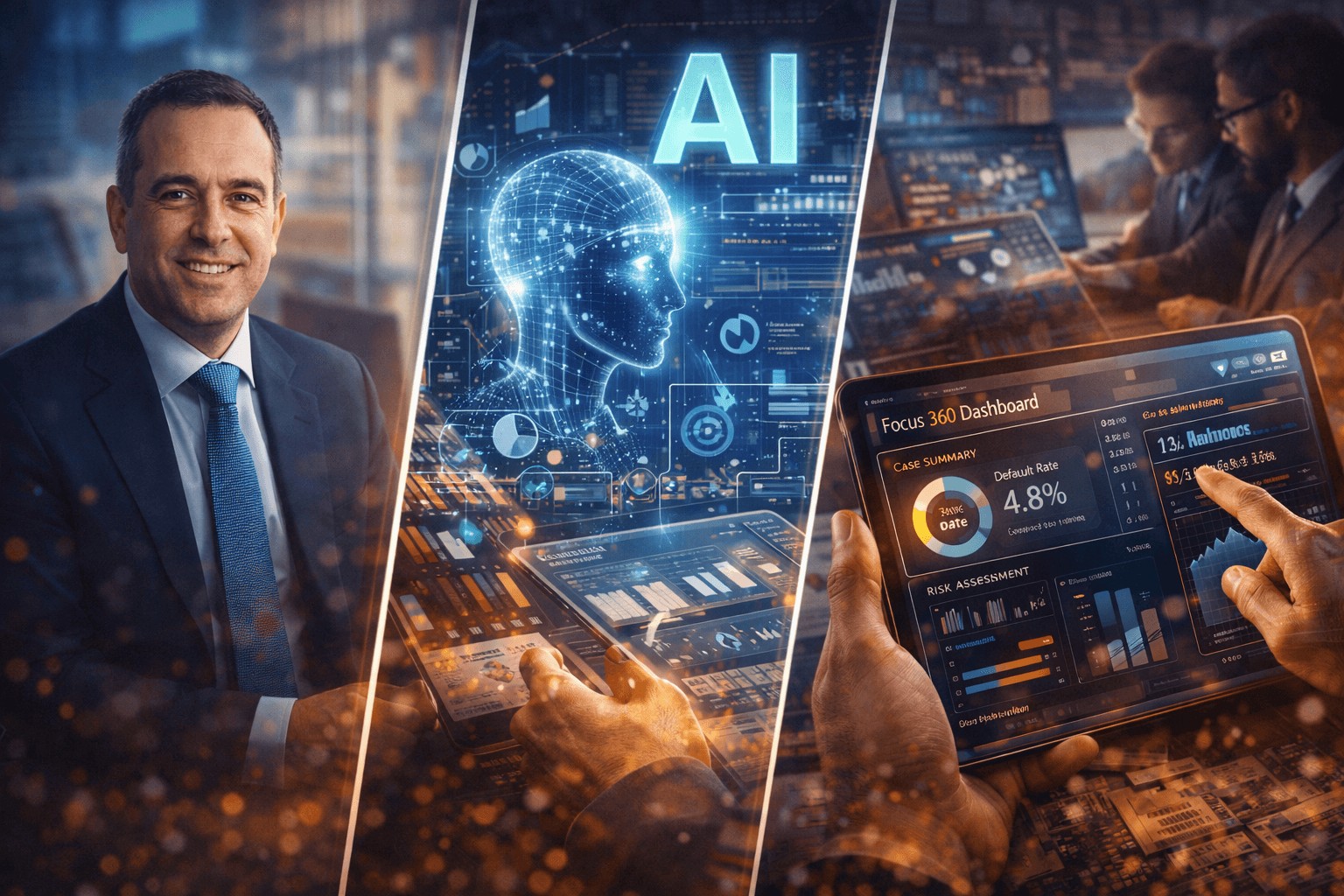
Carriers integrating these advanced, continuous validation layers report a 30% increase in overall fraud detection rates alongside a 40% reduction in false positives. This means legitimate claims are no longer delayed by clumsy, manual fraud reviews.
6. The Rise of Invisible, Embedded Insurance Ecosystems
Think about how you traditionally buy insurance: you go to a dedicated website or talk to an independent broker, fill out paperwork, and buy a completely separate financial product.
The sixth dynamic wave among the AI revolutions transforming the insurance industry in 2026 is the rapid mainstream adoption of embedded insurance. Insurance is transitioning from a standalone purchase into an integrated, almost invisible feature of consumer transactions.
Consumer Purchase (e.g., EV or Cargo) -> Instant Modular API Risk Check -> Policy Embedded at Point of Sale
Seamless API Integrations
Driven by modular, API-first architecture, insurance products are now directly injected into the digital point-of-sale systems of major retailers, automotive manufacturers, and real estate platforms.
-
When a customer purchases a high-end electric vehicle, the car’s native software communicates instantly with an insurer’s underwriting engine via APIs. The vehicle’s specific safety configurations, autonomous driving packages, and the buyer’s history are verified in milliseconds, embedding a hyper-customized auto policy directly into the monthly car payment before they even drive off the lot.
-
E-commerce platforms utilize predictive AI to offer real-time micro-coverage for international logistics shipments, calculating custom risk premiums based on the exact cargo type, destination, and live supply chain disruption data during checkout.
This transition allows Managing General Agents (MGAs) and agile insurtech enablers to scale incredibly fast. By bypassing traditional, high-friction distribution networks, carriers can acquire millions of customers at a fraction of the traditional cost.
7. The Human-in-the-Loop Governance Mandate and Explainable AI (XAI)
With all this incredible technological advancement, an important question arises: Are we handing complete control of our financial safety nets over to cold, unfeeling machines?
The seventh and perhaps most vital milestone of the AI revolutions transforming the insurance industry in 2026 is the hard pivot toward strict AI governance, explainability, and the “human-in-the-loop” operational philosophy.
The Consumer Trust Gap
While technology can process data at blinding speeds, blind trust is dangerously low. A comprehensive Deloitte Insurance and AI 2026 study revealed a fascinating psychological gap among global consumers:
A commanding 61% of consumers explicitly reject the idea of an AI making the final decision on whether to accept or reject an insurance application. Furthermore, 86% state that high-stakes financial decisions must ultimately be signed off by a real human being.
People are completely comfortable with AI acting as an assistant—translating dense, confusing policy jargon into plain English or offering safety tips to prevent losses. However, the moment an algorithm begins determining premiums or denying claims behind a closed digital curtain, consumers demand transparent accountability.
The Shift to Explainable AI (XAI)
In response to this consumer pushback and strict new regulatory frameworks, the industry is moving away from complex, inscrutable “black box” models. Instead, carriers are prioritizing Explainable AI (XAI) frameworks.
If an AI flags a health insurance application for a premium increase, it can no longer just spit out a final price tag. It must generate an easily understandable, step-by-step audit trail explaining exactly why it reached that conclusion. This ensures that human underwriters can easily review, verify, and explain the decision to a regulator or an everyday customer during an appeal.
Governance is no longer a boring backend IT compliance checkbox; it has become a frontline requirement for customer retention, corporate transparency, and brand trust.
Frequently Asked Questions (FAQs)
What is the primary difference between generative AI and agentic AI in insurance?
Generative AI focuses primarily on understanding, summarizing, and creating content, such as translating a complex policy into simple terms or answering basic customer queries. Agentic AI goes an important step further: it can reason, plan, and execute multi-step workflows autonomously across different enterprise software applications without needing human intervention at every step.
Will AI automation completely replace human claims adjusters and underwriters?
No. The prevailing industry consensus in 2026 emphasizes “human-in-the-loop” systems. AI acts as an incredibly powerful assistant, handling high-volume document triage, simple automated processing, and fraud screening. This shifts human adjusters and underwriters away from repetitive administrative work and allows them to focus on complex, high-stakes negotiations, regulatory compliance, and high-empathy customer interactions.
How does real-time underwriting affect my insurance premium?
Dynamic underwriting allows your premium to adapt directly to your actual behavior and live risk indicators rather than broad demographic averages. If you have safe driving habits via telematics, install smart water-leak detectors in your home, or maintain verifiable safety protocols in your business, your premium can decrease instantly to reflect that lower risk profile.
How are insurance companies protecting against AI deepfake fraud?
In 2026, carriers utilize continuous fraud intelligence models that automatically inspect the metadata of submitted digital media files. These systems check for signs of digital manipulation, cross-reference data across shared industry networks to spot suspicious behavioral habits, and run real-time biometric vocal analysis to identify synthetic voice-spoofing attempts.
What are consumers’ biggest concerns regarding AI in insurance?
As documented by global Deloitte surveys, the single biggest consumer concern is the risk of opaque, unfair, or biased decisions made by automated algorithms without human oversight. Because of this, 85% of consumers demand clear transparency regarding when AI is being used, and a large majority want an explicit, easily accessible human review and appeal process for all high-stakes decisions.